
Why Two Collagen Powders With the Same Label Can Perform Differently
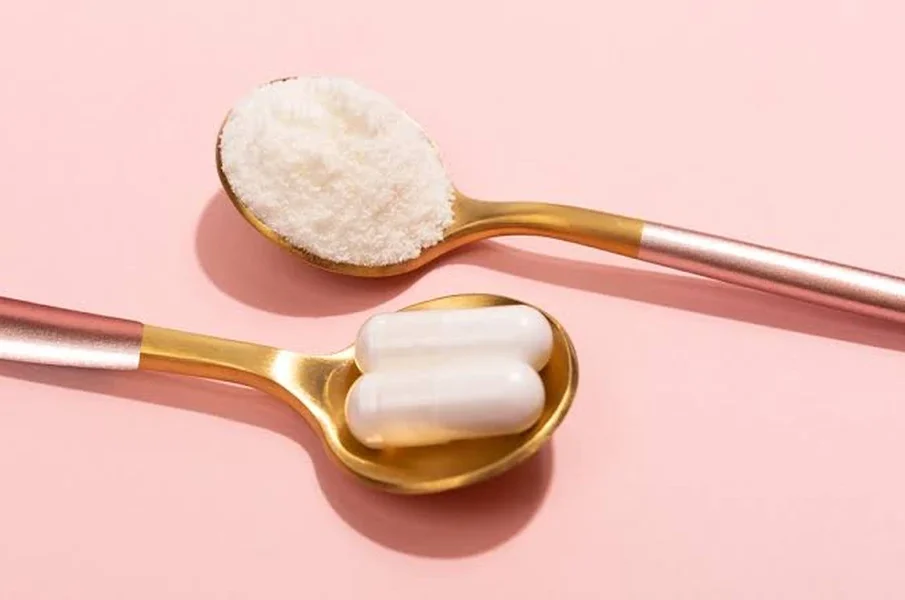
A formulator holds two collagen samples side by side. Same ingredient category, similar-looking spec sheets, both marketed as premium. In the finished product, one performs noticeably better than the other, and the label never explained why. Most brand owners sourcing marine collagen peptides for nutraceuticals are comparing the wrong variable when this happens. They’re looking at origin story. The number that actually predicts performance sits somewhere else entirely.
That number is molecular weight, and it rarely makes it onto the front of the spec sheet.
Collagen Isn’t One Ingredient
Collagen in its natural state is a large, intact protein. The body doesn’t absorb it especially well in that form, which is why most collagen intended for supplementation goes through hydrolysis first, an enzymatic process that breaks the protein down into much smaller peptide chains.
How far that breakdown goes is the part that varies between suppliers, and it’s also the part that determines how efficiently the finished product actually gets absorbed once someone consumes it.
What Molecular Weight Actually Predicts
| Factor | Higher Molecular Weight | Lower Molecular Weight |
|---|---|---|
| Absorption efficiency | Reduced | Improved |
| Solubility in liquids | Often lower | Typically higher |
| Flavor neutrality | Can carry more residual taste | Usually cleaner, more neutral |
| Suitability for beverages | Limited | Well suited |
| Marketing claim vs. lab reality | Harder to substantiate | Easier to substantiate with data |
Two suppliers can both call their product “premium” and “clean label.” Only one of them can hand over a molecular weight distribution to back it up. That’s the difference formulators should be pricing in, not the marketing language on the outer packaging.
Where Origin Fits Into The Decision
Origin still matters, just not for the reason most buyers assume. Marine sources tend to carry a cleaner, more neutral taste profile than land-animal sources, which matters a great deal in beverages and delicate formulations where flavor masking isn’t an option. That’s a real, practical advantage. It’s a formulation advantage though, not a proxy for absorption quality on its own.
A brand chasing the “clean beauty” or pescatarian positioning gets a genuine consumer-facing benefit from marine origin. It just shouldn’t be mistaken for evidence about how well the peptide performs once it’s in someone’s body.
The Type I Question
Type I collagen is the form most abundant in human skin, hair, and bone, which is why it shows up so often in beauty-from-within marketing. Confirming a supplier’s peptide is genuinely rich in Type I, not just labeled as such, is worth a direct question rather than an assumption based on the product category.
Some suppliers can point to specific research tying their peptide to measurable outcomes, skin hydration, density, elasticity. Others rely on category-level claims that technically apply to collagen broadly rather than their specific product. Asking which kind of evidence is actually being offered tends to separate the two quickly.
Formulation Versatility Isn’t Guaranteed Either
Not every collagen grade behaves the same way across product formats. A marine collagen peptides for nutraceuticals performs well in a capsule doesn’t automatically dissolve cleanly in a beverage, and one built for high-dose beauty shots isn’t necessarily the right grade for a daily maintenance capsule. Brands developing across multiple formats do better asking a supplier for format-specific data than assuming one grade covers everything.